


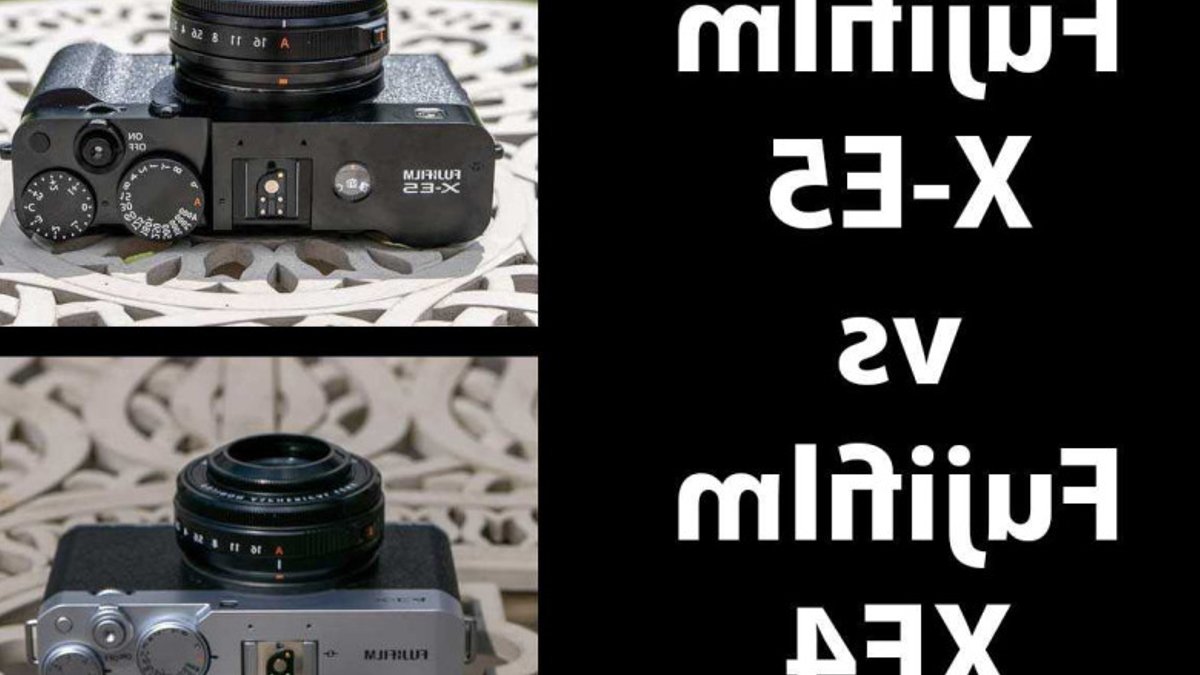
The Fujifilm X-E5 and X-E4 share a similar retro-inspired design, but the two cameras differ significantly in key areas—sensor resolution, video capabilities, autofocus performance, and price. Released in 2025, the X-E5 updates nearly every major component, while the X-E4 (2021) remains a capable but outdated model. The choice between them depends on priorities: resolution, video quality, or budget.
Sensor and Resolution: A Generational Leap
The X-E4 uses a 26.1MP X-Trans 4 sensor, while the X-E5 upgrades to a 40.2MP X-Trans CMOS 5 HR—the same sensor found in Fujifilm’s flagship X-H2 and X-T5. This jump in resolution means sharper stills and more flexibility in post-processing, though the X-E5 trades some high-ISO performance for finer detail. The older model’s sensor, while efficient, lacks the X-E5’s improved light sensitivity, which starts at ISO 125 (vs. ISO 160 on the X-E4).
The X-E5 also introduces 6K video recording (with a modest 1.23x crop), whereas the X-E4 maxes out at 4K/30p with no crop. The newer model supports DCI 4K/60p and F-Log 2 (14+ stops dynamic range), compared to the X-E4’s F-Log (11+ stops). Recording time improves too: the X-E5 can shoot 60 minutes at room temperature, while the X-E4 is limited to 30 minutes. Both cameras offer 12-bit RAW output via HDMI for external recording.
Read Also: Sony A7 V Outshines Nikon Z8 in Comparison
Autofocus and Speed: Trade-offs Between Performance and Resolution
Both cameras use the same hybrid autofocus system with 425 phase-detection points, but the X-E5 gains AI-powered subject detection—recognizing animals, cars, planes, and even insects—thanks to its X-Processor 5. The X-E4 lacks these advanced tracking features. Fujifilm claims the X-E5’s autofocus is faster, though the X-E4 still outperforms it in raw speed: 20fps (electronic shutter, no crop) vs. the X-E5’s 20fps (with a 1.29x crop). Mechanical shutter speeds are identical at 8fps.
The X-E5 compensates with a larger buffer for burst shooting, especially in JPEG mode, and a faster electronic shutter (1/180,000s vs. 1/32,000s). This makes it better suited for high-contrast lighting or fast-moving subjects. The X-E4, however, remains the better choice for action photography where sustained high frame rates matter more than resolution.
Design and Handling: A Return to Familiarity
Fujifilm revamped the X-E5’s design to resemble earlier X-E models, adding back dual command dials, a Film Simulation dial, and a handgrip that the X-E4 lacked. The X-E5 also introduces 5-axis in-body stabilization (IBIS), which the X-E4 lacks entirely—relying instead on lens-based OIS. The X-E5 features IBIS, supporting up to a maximum of 7 stops of compensation in the center.
Read Also: Panasonic’s new 100-500mm lens gets mixed review
Both cameras share the same 2.36M-dot OLED EVF and 3-inch tilting LCD, but the X-E5 supports UHS-II memory cards, while the X-E4 is limited to UHS-I. Battery life, however, drops: the X-E4 lasts 460 shots (CIPA-rated), while the X-E5 manages 310, 400 shots, depending on mode.
Weight increases slightly—445g with battery vs. the X-E4’s 364g—but the X-E5’s IBIS and larger sensor justify the extra bulk. The X-E4 remains the lighter, more portable option.
Price and Target Audience: A Clear Divide
The X-E4 launched at £799/$849 (body only), while the X-E5 now starts at £1,299/$1,699—nearly double the cost. The X-E5 is positioned as a premium upgrade, competing with the X-T series in features, while the X-E4 remains a budget-friendly alternative. The price gap reflects the X-E5’s 40MP sensor, 6K video, IBIS, and advanced autofocus, but buyers must decide if those upgrades justify the cost over the X-E4’s speed and simplicity.
Read Also: OM-5 Mark II vs OM-5 Comparison
For photographers who prioritize resolution, video, and stabilization, the X-E5 is the clear winner. Those who need speed, portability, or a lower price may still prefer the X-E4. The X-E5 also benefits from better low-light performance and more film simulations, including a dedicated dial for quick access. Yet its shorter battery life and higher price could deter some buyers.
The X-E4 remains a solid performer, especially for street photographers or videographers who don’t need 6K. The X-E5, meanwhile, feels like a flagship-lite—packing near-pro features into a compact body, but at a cost that aligns it more with the X-T series than its predecessor. Fujifilm’s pricing strategy effectively splits the market: the X-E4 for enthusiasts, the X-E5 for those willing to pay for the latest tech.


