


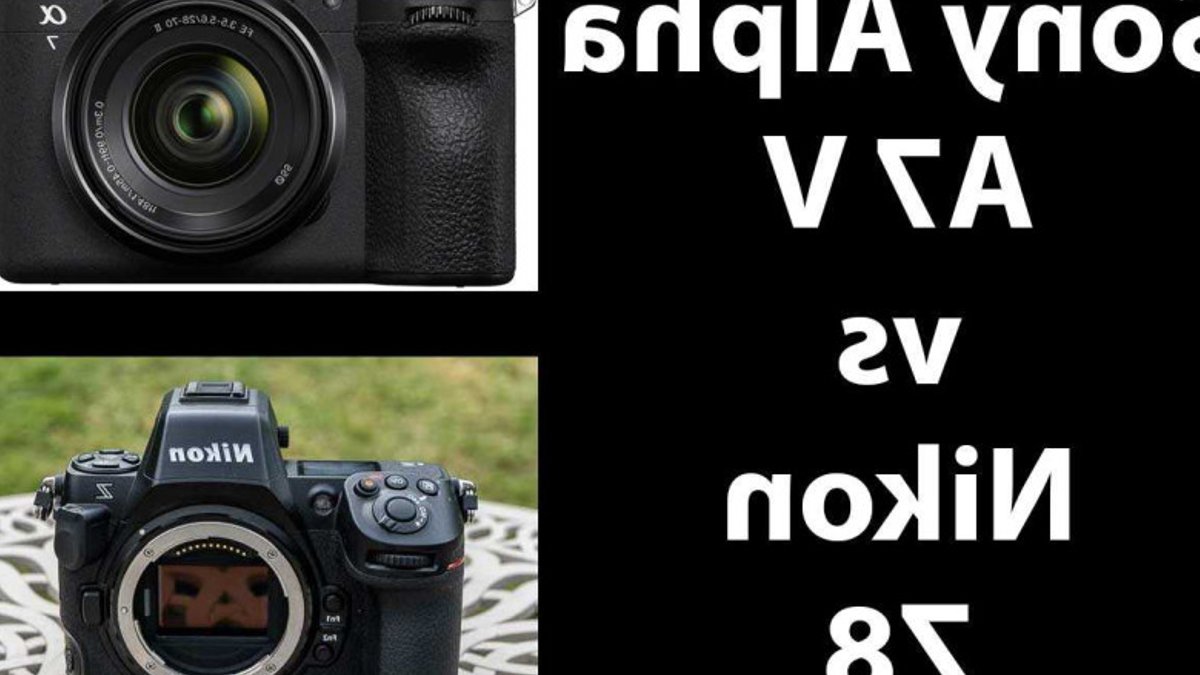
Digging deeper into the sensor technology, the Nikon Z8’s 45.7 megapixel stacked BSI CMOS image sensor, paired with the EXPEED 7 processor, enables it to capture more light and offer improved low-light performance. This is particularly evident in its impressive ISO range of 64-25,600 (expandable to 32-102,400), allowing for cleaner images even in challenging lighting conditions. Additionally, the Z8’s sensor is capable of delivering high-resolution images with exceptional detail, making it a highly capable camera for both stills and video shooting.
Sony A7 V’s Enhanced Sensor and Processor
The Sony A7 V’s 33 megapixel sensor, while not as high in resolution, is partially stacked and features the Exmor RS CMOS technology. This, combined with the new Bionz XR2 processor, allows for enhanced dynamic range, reduced rolling shutter, and faster readout speeds compared to its predecessor, the A7 IV. The A7 V’s 16+ stops of dynamic range enable it to capture a wider range of tones and colors, preserving details in both highlights and shadows. Moreover, its native ISO range of 100-51,200 (expandable to 50-204,800) provides flexibility in various lighting scenarios.
Exploring the video capabilities further, the Nikon Z8’s UHD 8K 60p/30p/24p recording with no crop factor allows for capturing stunning, high-resolution footage. Its 4K oversampled from 8K at 30p/25p/24p offers even greater sharpness and detail, while internal recording with 10-bit color and 4:2:2 sampling via ProRes 422 HQ and H.265 codecs ensures high-quality output. However, it’s important to note that the Z8’s 8K and 4K at 60p recording times are limited due to overheating considerations.
The A7 V, while not offering 8K, still provides impressive video features. Its 4K/120p in super 35mm crop mode and 7K oversampled 4K/60p full-frame recording ensure smooth and detailed footage. The dedicated Slow and Quick motion modes, along with the S-Cinetone, HLG, S-Log3, and S-Log2 profiles, along with support for M-LUT and Log recording with LUTs, provide users with extensive creative control over their videos. The new noise reduction function for the integrated mic also helps to enhance the overall audio quality.
AI-Driven Autofocus and Subject Tracking
The Auto Framing feature on the A7 V, powered by its AI-based subject recognition technology, is particularly useful for videographers. It automatically crops the frame to keep the subject in a prominent position, ensuring well-composed shots even when the camera is mounted on a tripod. This is a significant advantage for those working with moving subjects or in situations where manual framing might be challenging.
Looking into the autofocus and subject tracking capabilities, the Nikon Z8’s 493-point phase-detection AF system with 100% frame coverage ensures accurate and quick focusing. Its impressive low-light performance (-9EV in Starlight mode) allows for accurate focusing even in challenging lighting conditions. The Z8’s subject tracking works for a wide range of subjects, including humans, dogs, cats, birds, vehicles, and even aircraft, making it highly versatile for various shooting scenarios.
The Sony A7 V’s AI deep learning processing unit enables it to recognize a broader range of subjects, including humans, animals, birds, insects, airplanes, and cars/trains. Its ability to focus on specific parts of these subjects, such as helmets or eyes, ensures precise focusing even when dealing with complex or moving subjects. The new Auto mode on the A7 V is also a welcome addition, as it can choose the most appropriate subject mode, making it easier for users to capture well-focused shots.
The burst shooting capabilities of these cameras cater to different needs. The Nikon Z8 offers variable burst shooting rates ranging from 120fps to 20fps depending on the file format, allowing for high-speed capture of fast-moving subjects. The A7 V, on the other hand, has not been mentioned in the source to provide a consistent 30fps blackout-free burst.
Body Design and Build Quality Comparison
Looking at the body and design, the Nikon Z8’s larger and heavier build provides a sturdy and robust feel, making it well-suited for professional use. Its weather-sealed construction and compatibility with optional battery grips ensure durability and extended shooting capabilities. The A7 V, while smaller and lighter, is also weather-sealed and compatible with optional battery grips, providing users with a more portable yet equally durable option. The A7 V’s 7.5 stops of in-body stabilization, compared to the Z8’s 6 stops, ensures steadier shots even in low-light or telephoto scenarios.
The viewfinders on both cameras offer excellent clarity and responsiveness. The Z8’s 3.69m-dot, 0.8x-magnification OLED EVF with a 120fps refresh rate provides a smooth and immersive shooting experience. The A7 V’s 3.69m-dot EVF with 100% scene coverage, 0.78x magnification, and a 120fps high frame rate option offers a similar level of performance, making both cameras well-suited for tracking moving subjects.
The LCD screens on both cameras offer excellent resolution and touch functionality. The Z8’s four-axis tilting 3.2-inch, 2,100K-dot touch-screen LCD provides flexibility in composing shots from various angles. The A7 V’s LCD specifications have not been mentioned in the source.
In terms of pricing, the Nikon Z8 initially launched at around £3999 / $3999 but has since dropped to around £2799 / $3499. The Sony A7 V retails for £2799 / €2999 / $2,899 body-only, making it a more affordable option compared to the Z8’s current pricing.
The choice between the Sony A7 V and the Nikon Z8 ultimately depends on the specific needs and preferences of the user. Both cameras offer unique advantages in different aspects, such as dynamic range, video capabilities, autofocus, and burst shooting. By understanding these differences and considering the intended use case, enthusiasts can make an informed decision when choosing between these two formidable mid-range full-frame mirrorless cameras.


